
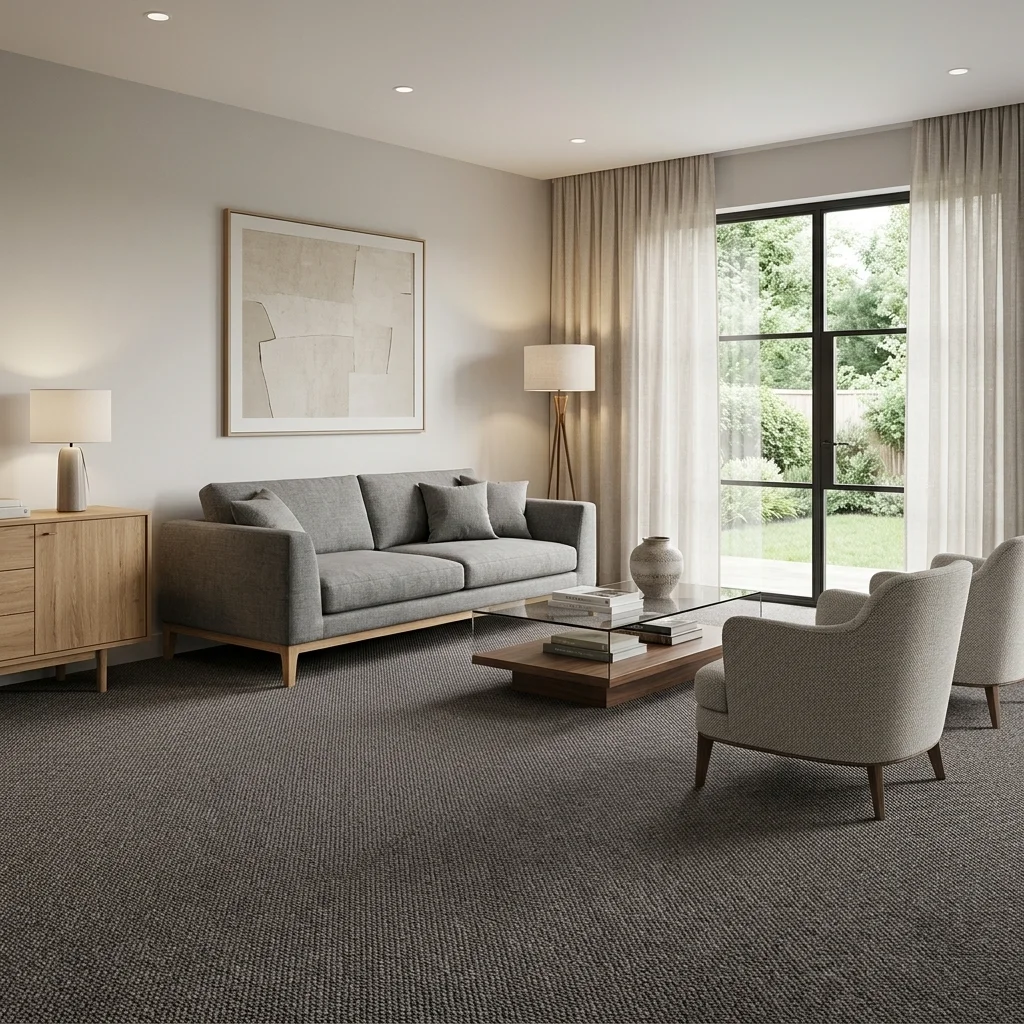
Carpet pile weight cannot establish quality. Chaparral Carpets in Seaford explains how density, fibre and room suitability shape a smarter buying decision.
Retailers comparing carpet specifications often face a simple question from customers: does a heavier carpet justify a higher price? Carpet pile weight provides useful information, but it cannot establish suitability without other specifications. We recommend comparing the construction and intended room use before treating an ounce figure as evidence of better quality.
Does Higher Carpet Pile Weight Mean Better Quality?
No, a higher figure does not automatically mean better quality or better performance in the intended room. Pile weight describes the mass of pile yarn per unit area, while total carpet weight includes backing materials. Those measurements answer different questions, so comparing them directly can create a misleading impression of value.
The relationship between yarn mass and pile thickness also matters, as explained in the Carpet Institute guidance on pile mass and density. Two otherwise similar carpets with the same surface pile mass can have different densities because their pile heights differ. A taller pile spreads that mass through a greater thickness, so weight alone cannot tell you how densely the carpet is constructed or how it will retain its appearance.
Reading Specifications Beyond the Ounce Figure
A useful comparison considers several characteristics together rather than turning one measurement into a quality score. Before recommending a product, check whether the available specifications describe comparable fibres and constructions.
- Measurement basis: Confirm whether the figure describes pile yarn or the complete carpet, and whether both products use the same units and measurement method.
- Pile height and density: Read these alongside weight where information is available. Avoid assuming that a heavier carpet necessarily packs its yarn more closely together.
- Fibre and construction: Wool loop pile and polyester twist pile have different material and construction profiles. Their weights cannot establish a universal ranking across the two styles.
- Intended use: Check the stated residential or commercial classification and any specific stair suitability. A residential rating does not establish suitability for a commercial installation.
Comparing Our Ranges Against Room Requirements
Our carpet collections include Kingston, described as a 50oz solution-dyed polyester twist pile, and Natural Choices, described as a 60oz wool loop pile. Both product pages state Extra Heavy Duty Residential, including stairs. The different weights therefore do not, by themselves, establish that one is a better purchase for every customer.
Start with the room’s traffic, preferred texture and purchasing priorities, then assess the relevant product information. For a retailer explaining carpet pile weight, the useful recommendation is to compare similar specifications and clarify missing details before ordering. Our published pages do not provide numerical pile heights or density measurements for these two ranges, so we cannot make a measured density comparison between them.
Suitable Carpet Selection with Chaparral Carpets
At Chaparral Carpets, we manufacture tufted carpets in wool and synthetic fibres for residential and contract markets. We encourage buyers to assess suitability through the available specifications rather than an isolated weight figure. This approach supports a more informed shortlist and helps retailers explain product differences without promising unsupported performance.
Get in touch with us to talk through your project needs and find a carpet that suits the intended space.